English desk
Back accounting and bookkeeping cleanup in Thailand
Back accounting is the work of rebuilding months or years of unkept books from bank statements, invoices and receipts, then filing the open periods so the company is regular again. It is the most expensive way to do bookkeeping and the most common rescue job we take on — the earlier it starts, the smaller the surcharge bill from the Revenue Department.
Phone +66-92-017-0000 · LINE and email accepted in English.
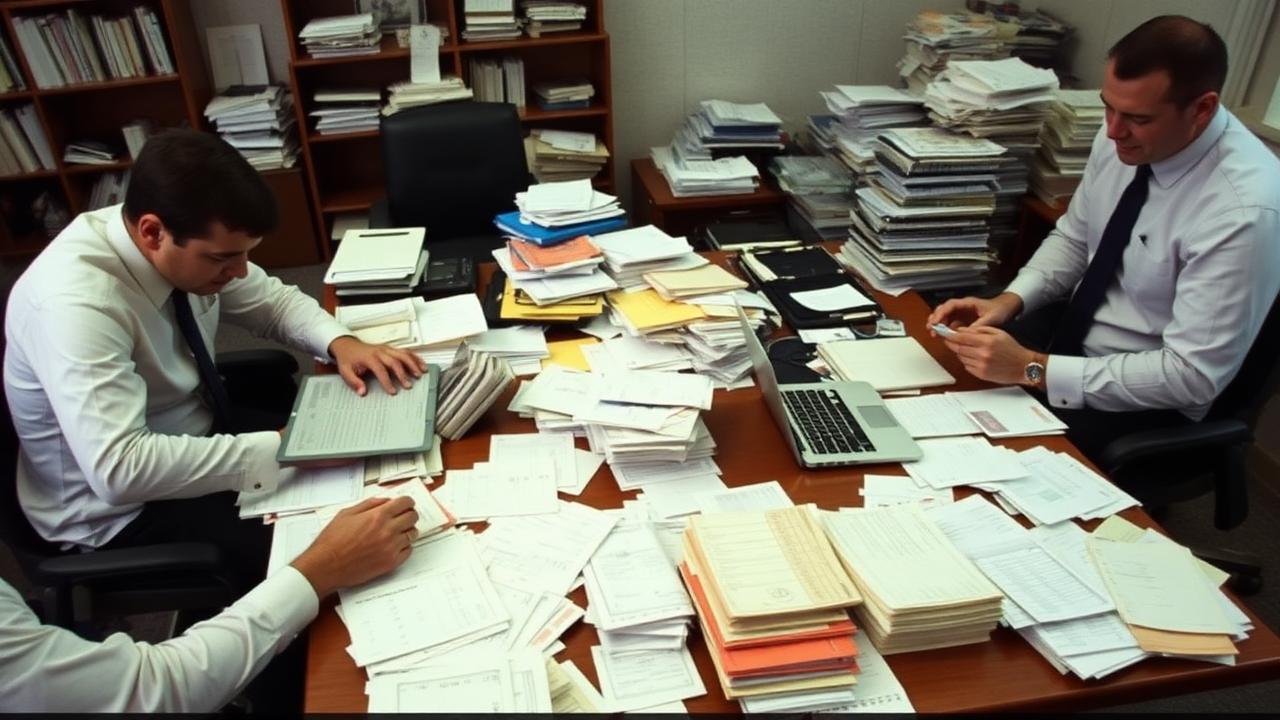
What this service covers
Document reconstruction
The ledger rebuilt from bank statements, invoice files, receipts and e-filing history, with gaps listed explicitly rather than estimated silently.
Back-period tax filings
Open VAT, withholding and corporate returns prepared and filed, with surcharge and penalty computed so the owner sees the full cost before committing.
Exposure assessment
Where past returns were wrong as well as late, the exposure is quantified and the correction options laid out in writing.
Handover into monthly compliance
Once the backlog is closed, the company moves onto a normal monthly cycle so the position never recurs.
How the engagement runs
1. Free status diagnosis
We map exactly which periods are open, which filings were missed and what source documents exist. This diagnosis defines the written quote.
2. Reconstruction
Period by period, the ledger is rebuilt from the bank trail — the bank statement is the spine, because it does not lie and it does not disappear.
3. Back filings
Returns are filed in the order that manages surcharge exposure, and receipts are archived for the record.
4. Prevention
Document flow, software and the monthly calendar are set up so next year there is nothing to clean up.
Deadlines, rates and filing formats change. Confirm current requirements with the Revenue Department, the Social Security Office and the Department of Business Development, or ask us to confirm them for your case before you rely on a date.
Rebuilding books that were left behind
Remediation work begins where normal bookkeeping cannot: unsorted documents, a ledger abandoned mid-year, returns submitted with nothing behind them, and balances nobody can explain. The first task is to rebuild a factual timeline from bank records, then attach evidence to each movement so that every amount acquires a known nature instead of a guess.
Once the picture exists, the exposure can be ranked. Assessment time limits, the size of unexplained differences and the likelihood of examination determine which period is addressed first, so the largest risk closes early and the cost is spread across a schedule the business can actually fund. Correcting voluntarily, before any inquiry, consistently costs less than being assessed.
The objective is not merely a complete set of books but a system that prevents recurrence. Delivery includes a rebuilt chart of accounts, a document routine with named responsibilities, and a short monthly checklist that lets an owner confirm for themselves that a period is genuinely finished — the practical difference between a cleanup that lasts and one that has to be repeated.
Reconstruct, do not estimate
Missing documents are requested from counterparties, banks and official systems. Estimating figures is precisely what invites an additional assessment.
Unexplained shareholder balances
Long-standing loans without agreements or interest attract questions, so they are documented and cleared through a planned sequence rather than written off.
Stock without a baseline
Where inventory was never counted we establish a new baseline from a physical count and record the variance explanation in the working papers.
Working through a backlog without stopping the business
Remediation cannot mean pausing operations, so the work runs on two tracks. The current period is brought under control first, because an accurate present stops the backlog growing while the historical years are addressed. Only then do we work backwards, closing each prior year in turn, since the closing balances of one become the opening balances of the next and reversing that order simply produces figures that have to be redone.
Recovering missing documents is a large part of the effort and much of it is achievable. Bank statements can be reissued, suppliers will reprint invoices, filings already submitted can be retrieved from official systems, and payroll can be reconstructed from bank transfers and social security records. What cannot be recovered is documented as an estimate with the basis stated openly, because a transparent estimate is defensible in a way that a silent guess is not.
Cost is the question every owner asks first, and the honest answer is that it depends on document volume and how many periods are affected. We therefore quote in stages: an initial assessment that establishes the size of the problem and the likely exposure, then a fixed scope for each period. That way the decision to continue is made with real numbers rather than an open-ended commitment, and the work can be paced to match cash flow.
Assessment time limits
The period during which the authorities may review a filing is not unlimited, and knowing where each year sits against that limit determines which ones are urgent and which are effectively closed.
After the cleanup
Finishing a remediation without changing the routine that caused it guarantees a repeat. Handover includes the monthly process, the responsibilities and the checkpoints that keep the ledger current.
Handling it in-house versus engaging us
Attempting a cleanup internally almost always takes several times longer than planned, because it means reconstructing memory, chasing third parties for copies and learning the rules that applied in each earlier year. Surcharge continues to accrue throughout. A team that performs remediation routinely closes the matter sooner and, counting penalties avoided, usually for less in total.
Every engagement is quoted individually after we review your documents and agree the scope, so you know the fee and the timeline before any work starts. Send the details on LINE or by email and we will come back with a written proposal.
Common situations we are hired for
A company that traded for years without books
The bank trail and the invoice set allow a faithful reconstruction in most cases; what cannot be evidenced is documented as a gap with the position stated.
An accountant who left without handing over
We recover e-filing access, obtain the filing history from the Revenue Department record, and rebuild from the bank statements.
A Revenue Department review letter on old periods
Responding requires reconstructed records; we prepare the evidence file and the reply, and quantify any additional assessment risk.
Cleanup before a sale or closure
Buyers and liquidators both require complete books; the cleanup is sequenced so the transaction is not held up by missing years.
See the English-speaking accounting firm overview, all accounting services or the province pages below.
Questions owners ask first
- How many years back can books be rebuilt?
- Practically, as far back as bank statements and invoices survive — banks provide historical statements, and counterparties can often re-issue invoice copies. The tax exposure side has statutory time limits, but the accounting reconstruction should cover every open period regardless.
- What will the penalties be?
- Surcharge is 1.5 percent per month on tax due, capped by law, plus per-return penalties. On a nil-tax period the cost is limited to the penalties; where tax was payable, the surcharge is material — which is why filing sooner is always cheaper.
- Will cleanup trigger an audit or investigation?
- Voluntary back-filing is a normal correction route and is treated far more leniently than periods discovered in a review. We advise on the sequence that presents the regularisation correctly.
- What does a cleanup cost?
- It is priced per period by transaction volume and document condition, quoted in writing after the free diagnosis — a company with two open months and one with five open years are different jobs entirely.
อ่านต่อรายจังหวัด
แก้บัญชีค้างและจัดทำงบย้อนหลัง พร้อมเคลียร์ค่าปรับ — เลือกจังหวัดของคุณ
แต่ละจังหวัดมีสำนักงานพื้นที่ที่ต้องติดต่อ รอบส่งเอกสาร และลักษณะธุรกิจต่างกัน หน้าด้านล่างเขียนแยกตามพื้นที่จริงและเสนอราคาเป็นรายกรณี
ภาคกลาง
ภาคตะวันออก
ภาคตะวันตก
ภาคเหนือ
ภาคตะวันออกเฉียงเหนือ (อีสาน)
ภาคใต้
Send your documents, get a written quote
A short review of your situation is enough for a scoped fee. We reply in English, and the review costs nothing.
แหล่งอ้างอิงที่ตรวจสอบได้
ตรวจตัวบทและแนวทางของหน่วยงานได้จากลิงก์ต้นทางด้านล่าง ขอบเขตที่แต่ละแหล่งรองรับระบุไว้ใต้ชื่อเอกสาร ข้อสรุปเฉพาะกิจการต้องพิจารณาข้อเท็จจริงและกฎที่มีผลกับช่วงเวลานั้นด้วย
1. พระราชบัญญัติ
พระราชบัญญัติการบัญชี พ.ศ. 2543กรมพัฒนาธุรกิจการค้า
หน้าที่จัดทำบัญชี คุณสมบัติผู้ทำบัญชี ระยะเวลาเก็บรักษาบัญชีและเอกสาร และกำหนดนำส่งงบการเงิน
2. ประมวลกฎหมาย
ประมวลรัษฎากรกรมสรรพากร
ตัวบทหลักของภาษีเงินได้ ภาษีมูลค่าเพิ่ม ภาษีธุรกิจเฉพาะ และอากรแสตมป์ พร้อมกฎกระทรวงและคำสั่งที่ออกตามความในประมวล
3. ระบบ/แบบฟอร์มราชการ
ระบบยื่นแบบผ่านอินเทอร์เน็ตของกรมสรรพากรกรมสรรพากร
ช่องทางยื่นแบบและชำระภาษีออนไลน์ พร้อมกำหนดเวลาขยายเพิ่มสำหรับการยื่นทางอิเล็กทรอนิกส์
4. ระบบ/แบบฟอร์มราชการ
ระบบนำส่งงบการเงินทางอิเล็กทรอนิกส์ (DBD e-Filing)กรมพัฒนาธุรกิจการค้า
ช่องทางนำส่งงบการเงินและบัญชีรายชื่อผู้ถือหุ้นในรูปแบบอิเล็กทรอนิกส์
5. พระราชบัญญัติ
พระราชบัญญัติประกันสังคม พ.ศ. 2533สำนักงานประกันสังคม
การขึ้นทะเบียนนายจ้างและผู้ประกันตน ฐานค่าจ้าง อัตราเงินสมทบ กำหนดนำส่ง และสิทธิประโยชน์เจ็ดกรณี
ตรวจทานล่าสุด โดย หุ้นส่วนผู้จัดการ · ทนายความอาวุโส สภาทนายความในพระบรมราชูปถัมภ์